Jun 5, 2026
I1600, I3200, F1080 and TX800: choosing the right Epson-head UV platform
Printhead choice should follow the business model. A trophy shop, a UV DTF seller and a sign shop do not need the same machine or the same service budget.
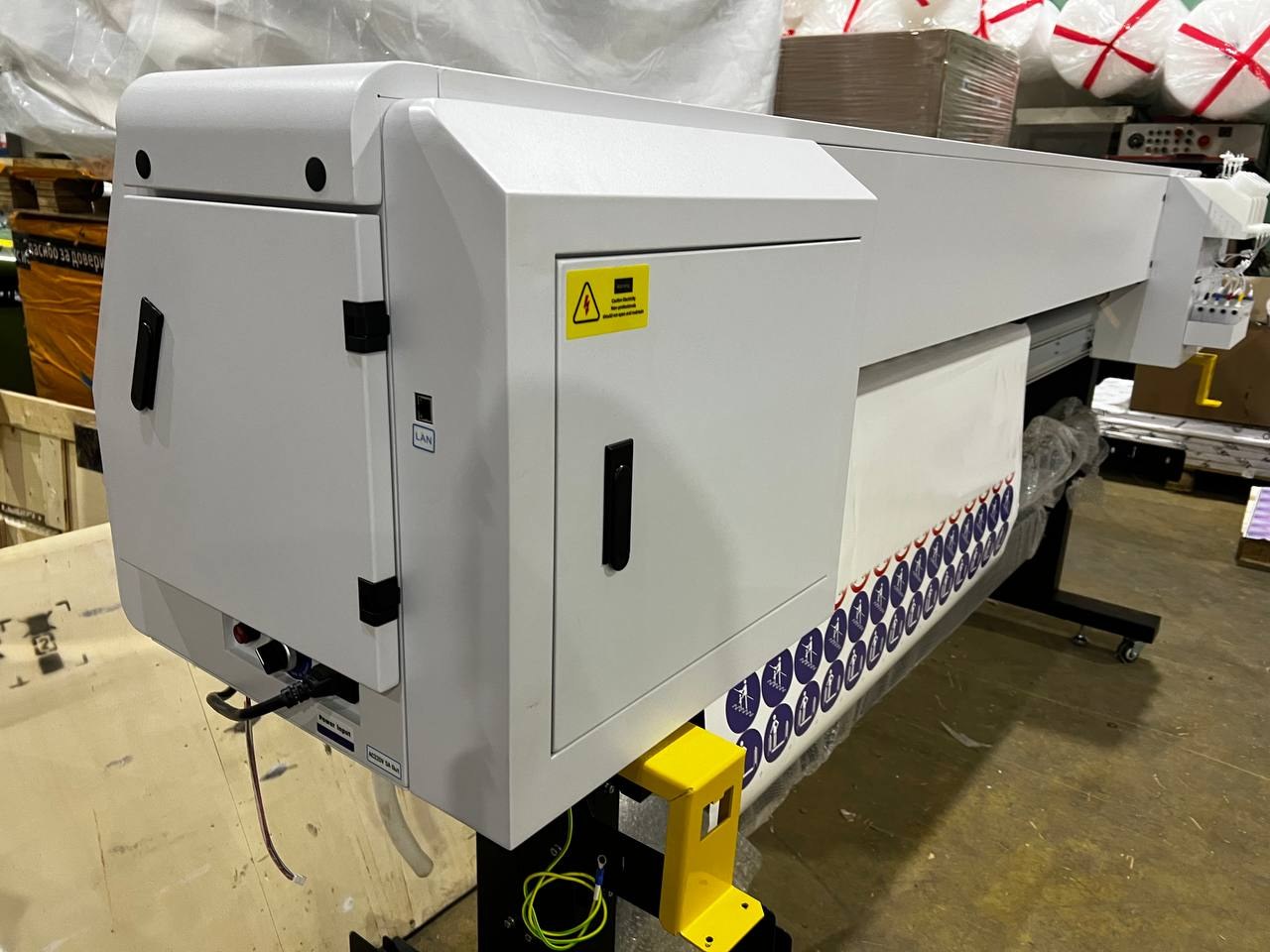
Printhead choice should follow the business model. A trophy shop, a UV DTF seller and a sign shop do not need the same machine or the same service budget.
Printhead names are easy to turn into shorthand. Buyers hear I3200 and assume production. They hear I1600 and assume compact. They hear F1080 or TX800 and assume entry level. Those shortcuts are partly useful, but they can also cause bad purchases. The correct head configuration depends on the work, the volume, the required quality, the ink set, the operator skill and the replacement budget. A printhead is not a business plan.
For Epson.Press buyers, the head conversation starts with the first six months of jobs. Will the machine print small personalized products a few hours a day? Will it run acrylic and metal panels daily? Will it print roll media? Will it produce UV DTF transfers? Does the shop need white and varnish on nearly every order? How damaging is downtime? Those answers decide whether the machine should be an I3200 production platform, an I1600 focused system, or a lower-cost F1080/TX800 entry unit.
The best choice is rarely the most expensive head count the buyer can afford. A six-head machine is wasteful if it sits idle. A single-head entry unit is frustrating if the shop promises production turnaround. A balanced machine gives enough capacity to produce the work at a profitable speed while leaving budget for freight, spare parts, fixtures, training and marketing.
Epson's public I Series information describes the I3200 and I1600 families as PrecisionCore MicroTFP printheads. The I3200 series is publicly listed with 3200 nozzles and a compact 33.8 mm effective print width. The I1600 series is listed with 1600 nozzles and the same effective print width class. Depending on the exact model, Epson positions these heads across aqueous, UV/eco-solvent and other ink applications. The public details help buyers understand why these heads appear across many industrial and wide-format machines.
The S Series is different and includes heads such as S3200, which Epson presents as focused on productivity, image quality and head expandability. Some S Series heads include common channel recirculation. That can matter for white ink and industrial stability, but machine design still decides the final workflow. A printhead data sheet is not a guarantee that a finished printer is well engineered. It is one component in a larger system.
The important buyer lesson is this: ask for the exact head model, ink compatibility, head count, warranty assumptions and replacement process. The name on the quote should be specific. A vague 'Epson head' description is not enough for a serious purchase.
| Head family | Typical role | Buyer meaning |
|---|---|---|
| I3200 | Production UV flatbed, UV DTF, roll-to-roll and hybrid configurations | Strong balance of speed, quality and broad parts ecosystem. |
| I1600 | Focused compact, cylinder or narrower systems | Useful when the product is controlled and throughput demands are moderate. |
| F1080 / TX800 | Entry machines, sampling, low-volume personalization | Lower capex, but not the same production class as I3200. |
| S Series | Higher productivity industrial configurations | Worth evaluating when speed, recirculation and expansion matter more than entry cost. |
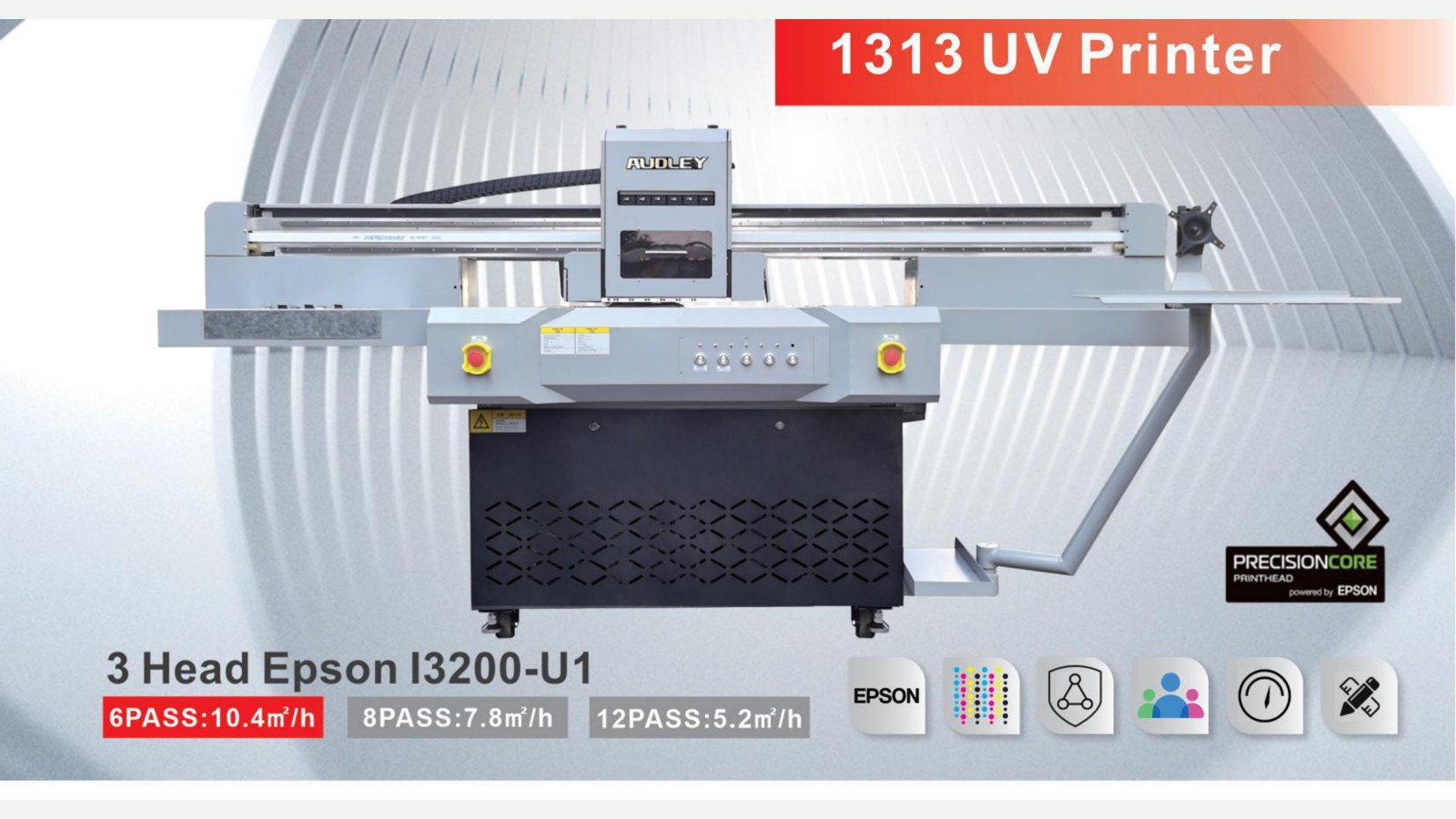
The I3200 class is attractive because it often sits in the middle of the market. It is more serious than entry heads used for light sampling, but it can still keep the machine price far below many premium-brand systems. For UV flatbeds, UV DTF systems, roll printers and hybrid printers, I3200 configurations are common because they offer a workable balance of resolution, throughput and replacement planning.
For a U.S. shop, I3200 makes sense when the printer is expected to produce revenue every week, not only make occasional samples. A 9060 or 1313 flatbed with I3200 heads can support acrylic, wood, glass, metal, packaging prototypes, signage panels and repeat jigs. A roll or hybrid configuration can support banners, wall graphics, film, poster work and boards depending on the mechanics. UV DTF systems with I3200-class heads can create transfer volume for drinkware and hard goods.
The risk with I3200 is not that it is too weak for practical work. The risk is buying the wrong machine around the head. Poor alignment, weak frame, unstable ink delivery, bad RIP setup, weak curing or poor supplier support can make a good head perform badly. Epson.Press evaluates the system, not only the head name.
The I1600 family is not simply 'half an I3200' in business terms. It can be a sensible choice for focused machines where the product width, speed requirement or machine class does not justify a larger head configuration. Cylinder printers, compact UV systems and certain specialized workflows can benefit from a more controlled head setup if the work is repeatable and the operator is not chasing broad-format throughput.
A buyer should consider I1600 when the product category is specific: bottles, cylinders, smaller hard goods, moderate-volume flat products or shops that need reliability and quality more than maximum speed. It can also make sense when the machine's mechanics are optimized for a narrow task. A specialized cylinder printer does not need to act like a 1313 flatbed. It needs to hold the object, rotate accurately, cure properly and repeat the print with minimal rejects.
The key is honesty about volume. If the shop has high-volume board work, I1600 may be the wrong lane. If the shop has a profitable niche with predictable objects, it may be exactly enough.
F1080 and TX800 class machines can be valuable when the buyer is validating a product line. A new seller may not know whether acrylic awards, phone cases, UV DTF stickers or small gifts will sell. A lower-cost machine can create samples, build an online catalog and generate early orders without the financial pressure of a production-class purchase. That can be smart if expectations are clear.
The mistake is treating entry heads as if they will behave like production I3200 systems. They may be slower. Replacement economics, stability and long-run durability can differ. They may be better for sample making, light production or controlled small-batch work than for daily commercial throughput. A shop that buys an entry machine and sells it as a high-volume production engine will disappoint customers and operators.
Used correctly, an entry platform can reduce risk. It lets a business prove demand, photograph products, test pricing and learn UV maintenance. Once demand is real, the shop can step into I3200 or larger systems with clearer knowledge of what bed size, ink set and workflow it actually needs.
Buyers ask a sharp question: how many expensive and cheap printheads are discarded every year? There is no reliable public U.S. registry that counts discarded UV printheads by brand, model or machine class. Printheads fail inside private shops, are replaced by dealers, shipped back to suppliers, stored in drawers or thrown away. Any exact public number would be suspicious. But a scenario model is still useful because it shows why replacement cost matters.
Imagine a conservative population of 5,000 to 15,000 active U.S. small-format UV, UV DTF, DTF, eco-solvent and related Epson-head machines that replace between 2 and 8 heads per year depending on usage, maintenance and head class. That creates a broad scenario of 10,000 to 120,000 lower-cost heads replaced annually. The range is wide because the installed base is fragmented and usage varies wildly. Some shops nurse heads for a long time; others destroy heads through idle white ink, wrong cleaning fluid, poor capping or contaminated ink.
Premium industrial head assemblies may be replaced in lower quantities, but each event can represent a much larger dollar loss. That is why the business question is not merely 'cheap head or expensive head.' It is: can the shop maintain the machine, source replacements, keep spare parts available and price jobs with head risk in mind? A lower-cost head ecosystem can reduce fear of replacement, but it should not encourage careless maintenance.
| Scenario | Machines modeled | Heads per machine per year | Annual replacement range |
|---|---|---|---|
| Low replacement scenario | 5,000 | 2 | 10,000 heads |
| Middle replacement scenario | 10,000 | 4 | 40,000 heads |
| High replacement scenario | 15,000 | 8 | 120,000 heads |
| Important note | Not a published statistic | Scenario only | Used to plan risk, not to claim a market count |
Printheads fail for many reasons: dried ink, clogged nozzles, electrical damage, head strikes, bad cleaning fluid, contaminated ink, poor capping, low humidity, rough media handling and operator neglect. A better machine reduces some risks, but no machine removes the need for maintenance. This is especially true with UV ink and white ink. The chemistry cures hard for a reason; if it dries where it should not, the head suffers.
A practical maintenance rhythm includes daily nozzle checks, proper wiping, clean caps, stable ink supply, white ink movement, periodic line checks, humidity awareness and documented shutdown procedure. Operators should know what not to do. Do not scrape the head. Do not use random solvent. Do not leave white ink idle for long periods without following procedure. Do not keep printing customer work through a failing nozzle check and hope it fixes itself.
Epson.Press frames this as part of the purchase because a printer that is easy to service is more valuable than a printer that looks impressive in a photo. Accessible caps, pumps, dampers, filters, cables and boards matter. Spare parts matter. Operator confidence matters. The easier the machine is to understand, the faster a small shop can recover from ordinary maintenance events.
A trophy and awards shop should prioritize repeat fixtures, white ink consistency, small object placement and operator simplicity. An I3200 6090/9060 flatbed or a focused smaller system may be enough depending on volume. A sign shop should prioritize bed size, roll handling, board weight, curing, vacuum zones and speed. A UV DTF seller should prioritize film path stability, lamination, white/varnish behavior and transfer consistency. A packaging prototype shop should prioritize color control, flatness, registration and material testing.
The printhead supports the work, but the product category decides the system. If the work is rigid and flat, buy flatbed capability. If the work is curved, consider cylinder or UV DTF. If the work is roll-heavy, buy roll-to-roll or hybrid. If the work is high mix and low volume, do not overbuy speed. If the work is campaign production, do not underbuy speed.
Do not buy printheads. Buy a production system that matches a revenue plan. The I3200 is often the sweet spot because it gives practical production capability without forcing a premium-brand budget. The I1600 can be excellent for focused machines. F1080 and TX800 class systems can be good entry tools when the buyer understands their role. The wrong choice is the one that ignores the work.
Before Epson.Press quotes a machine, we want to know what you will print, how many jobs you expect each month, which substrates matter, how much floor space you have and how hands-on your operators can be. That conversation protects the buyer from overbuying, underbuying or choosing a printer only because a spec sheet looked impressive.